EN

Jewelry Electroplating: Color, Durability and Skin Safety
2026/09/21
Discover the benefits of jewelry electroplating in color, durability, and skin safety. Learn how it enhances your jewelry's longevity.
Few questions come up more often in custom jewellery than this one: why did my brass ring leave a green mark on my finger? It is a fair question, and the answer is chemistry rather than quality control alone. Copper-bearing metals react with sweat, and the result is a harmless but unwelcome green or black stain. What separates a factory from a good factory is whether that reaction has been engineered out of the product before it ever reaches a customer. This is one of the areas where our own production has a genuine technical advantage, so it is worth explaining properly.
Brass is a copper alloy, and copper is chemically reactive. When copper meets perspiration it reacts with the salts and acids in sweat and forms copper compounds - typically copper carbonates and chlorides - which are green to blue-green. The same reaction with sulphur compounds produces darker, grey-black marks. These compounds are cosmetic: they stain skin and fabric, they are not absorbed in any meaningful way, and they are not a sign that a ring is dangerous. They are, however, a clear sign that the metal underneath the plating is exposed to sweat.
Four factors decide how quickly a piece leaves a mark. The first is the copper alloy itself: different brass formulations leach at very different rates, and this is a formulation decision made long before production. The second is whether the piece is properly plated: a correctly built multi-layer stack keeps sweat away from the copper entirely. The third is thickness, especially on edges where wear starts; a colour layer that is measured in fractions of a micron disappears in weeks. The fourth is how the piece is worn - acidic or high-salt perspiration, humid climates, exercise, repeated friction and contact with lotions and perfumes all accelerate the reaction. Brass that has been worn for years and shows a pale, slightly pinkish patch is brass whose plating has simply worn through on a high-contact surface.
Preventing green marks is not a single trick. It is a system, and all four parts have to be present. First, the base alloy must be formulated so that it does not readily release copper even when exposed; this is the hardest part to copy because it lives in the foundry recipe. Second, the surface has to be prepared and barrier-plated so that the base metal is sealed before any colour is applied. Third, the colour plating layer must be thick enough to survive friction on the highest-wear areas, not just in the middle of the piece. Fourth, a protection layer has to be applied on top to slow down attack from sweat, cosmetics and abrasion. Remove any one part and the green mark returns on exactly the customers you least want to lose.
This is where our championship-ring copper formula comes in, and it is one of the technical highlights we are most proud of. The formula is built so that even if the plating layer is worn through, the wearer's finger does not pick up copper-green staining. In practice that means the piece degrades gracefully: the colour may eventually dull on a heavily worn edge, but the skin stays clean. Most suppliers cannot offer this, because it is a material and process decision rather than an after-treatment - and it is exactly why we have been trusted with championship and graduation ring programmes where the rings are worn daily by end users who will notice a stained finger immediately.
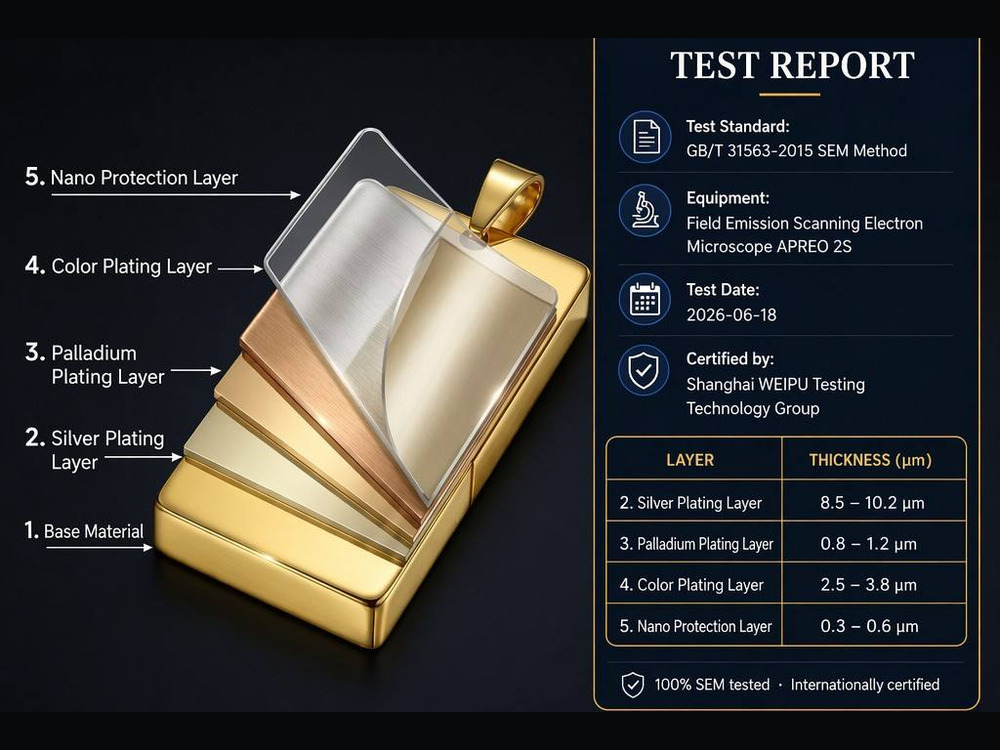
Copper and brass products run through the same production flow as our silver work - casting, filing, polishing and plating - and the finish is verified rather than assumed. Our multi-layer plating architecture ends in a nano protection layer that shields the colour layer from sweat and cosmetics, and layer thickness is measured by scanning electron microscope cross-section rather than judged by eye. On a recent US college-ring programme, the client specification was 48-hour salt spray resistance on a copper base with a three-layer PVD gold finish. Independent testing of our production passed at 72 hours, and the programme moved from a first order of 500 pieces to more than 2,000.
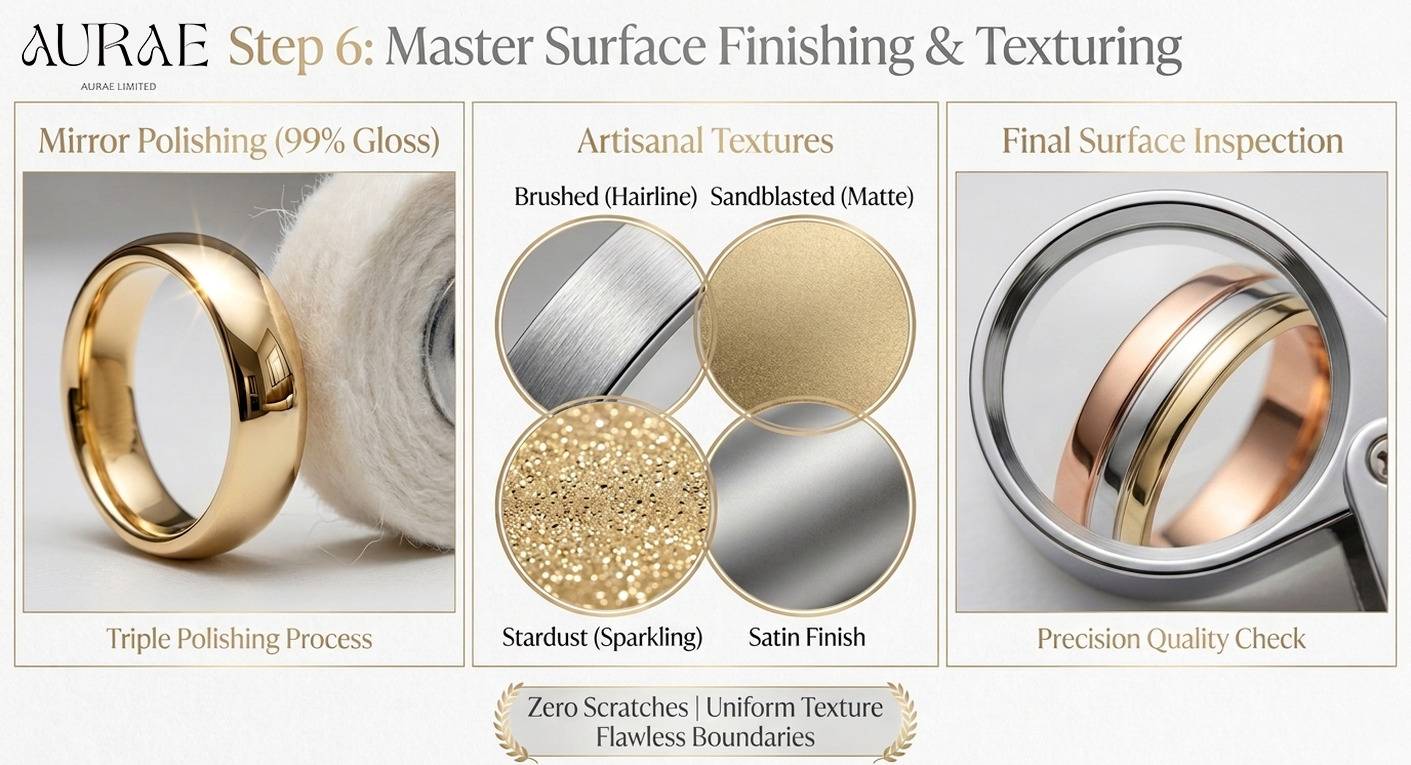
Because wear always attacks edges first, our finishing sequence matters as much as the plating chemistry. Castings are filed and refined through a grit spectrum from 400 to 2000, then polished in three stages to a mirror finish so that the plating has an even substrate to bond to. Edges are rounded rather than left sharp, which removes the thin coverage that causes patchy wear. After plating, pieces are inspected under 10x magnification for zero scratches, uniform texture and clean colour boundaries, and every item passes a 20-point checklist covering size and weight accuracy, hallmarks, clasp and hinge function, stone security and surface quality. Nothing ships on a visual guess.
Care extends the life of any plated piece, including ours. Wear jewellery last when dressing and remove it first at night. Keep it away from perfume, lotions and cleaning agents, which attack the protection layer. Take rings off before swimming or training, and wipe them with a soft dry cloth after wear so that sweat and cosmetics do not sit on the surface overnight. Store each piece separately in a velvet-lined compartment or a sealed pouch; friction between pieces dulls plating faster than anything else in a jewellery box. If a piece is worn continuously for years, expect the plating to thin eventually - the difference with our copper formula is that thinning plating will not stain the skin.
Brass and white copper are produced on the same lines as our silver collections, which means the same tooling discipline and the same inspection standard apply. Our minimum order for copper projects starts at 50 pieces per design, and every custom job begins with a 1:1 CAD model approved by the client before casting. If you are sourcing brass or copper jewellery and have been burned by green marks, ask your supplier one question: what happens when the plating wears through? If the answer is a re-plating policy rather than an alloy specification, the green marks will come back. Send us your design and wear scenario and we will show you the specification that prevents them.
2026/09/21
Discover the benefits of jewelry electroplating in color, durability, and skin safety. Learn how it enhances your jewelry's longevity.
2026/09/18
Discover tips for selecting the perfect gemstones for your custom jewelry at AURAE. Make informed choices for stunning designs.
Bespoke know-how from our studio and factory floor: how we choose gemstones, build plating that lasts, and keep brass jewellery from turning skin green.
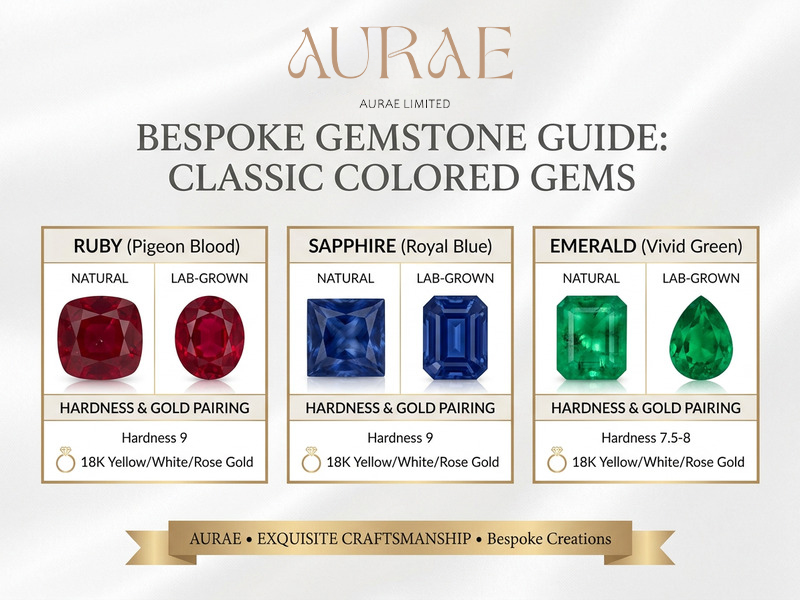
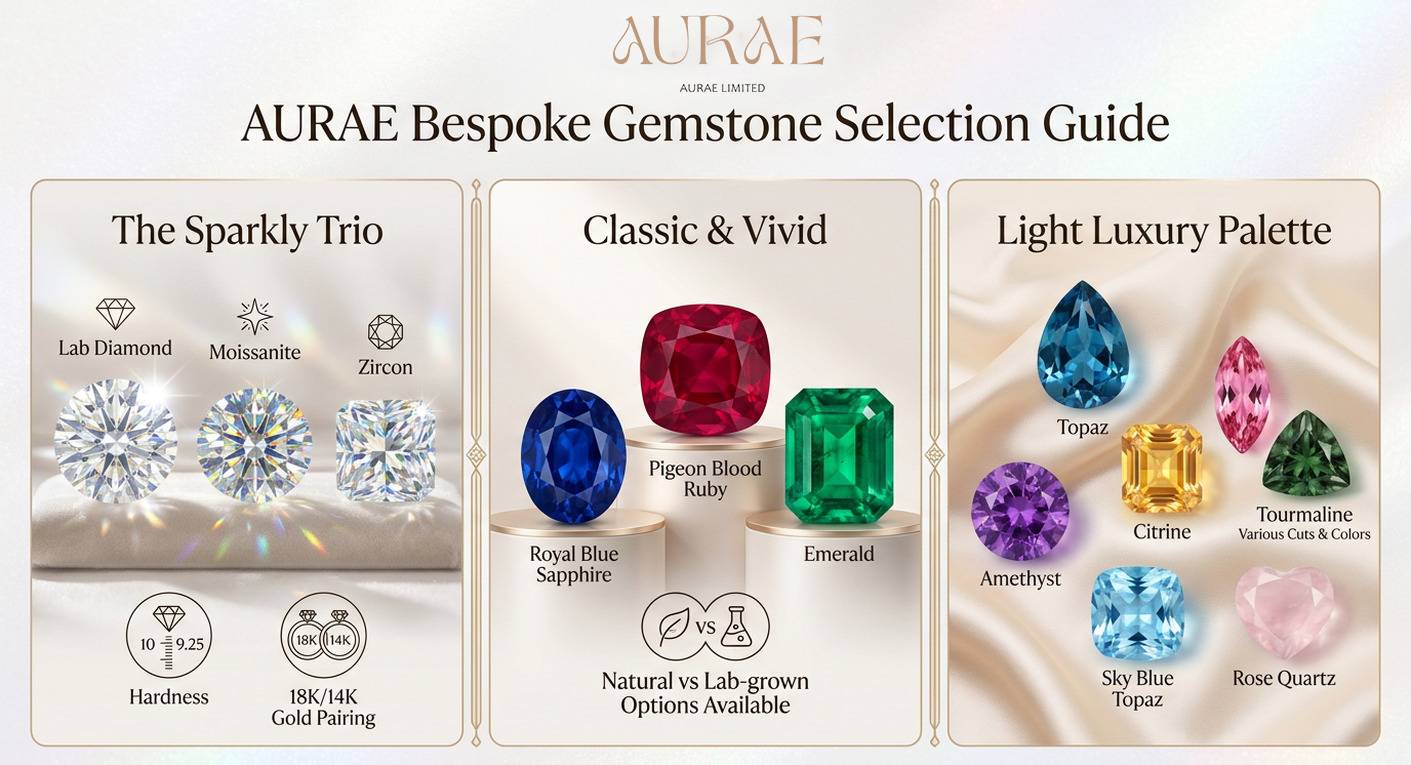
Hardness, colour and setting decide how a bespoke piece looks and wears. Our guide pairs lab diamond, moissanite, zircon, ruby, sapphire and emerald with a matching gold tone and a protective setting.
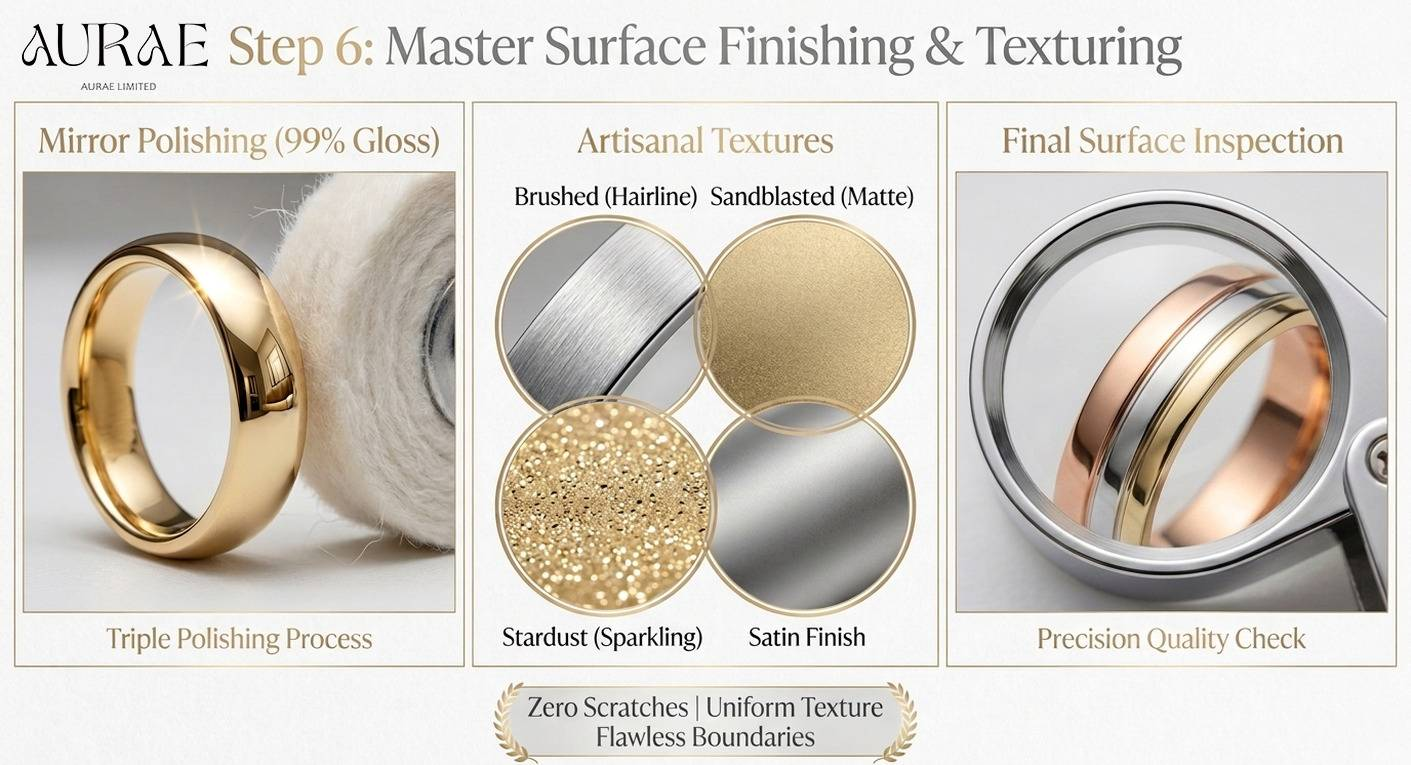
What happens between polishing and packing decides whether a finish lasts: water versus vacuum plating, the five-layer stack, white, gold and rose colour baths, and our salt-spray standard.
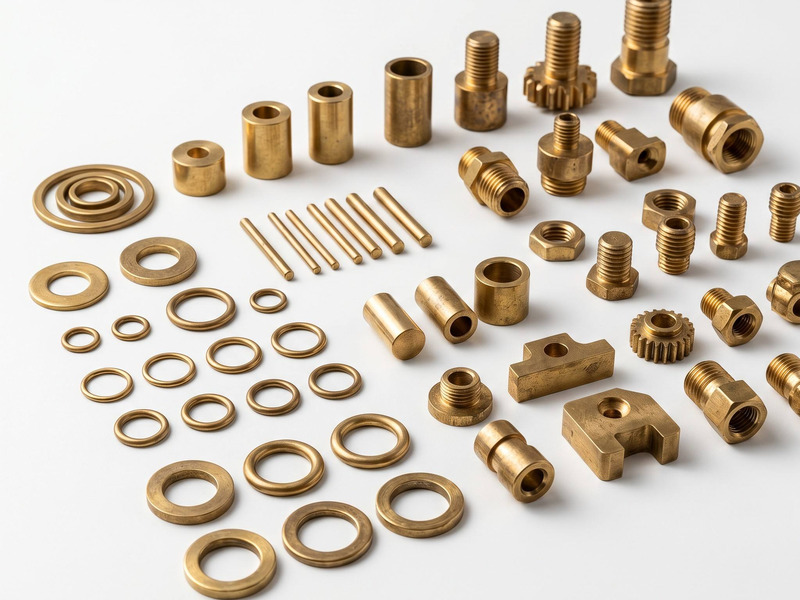
Green marks come from brass meeting sweat - and they can be engineered out. Our championship-ring brass formula keeps skin clean even when plating wears through.